Sunday, 31 July 2016

Some thoughts on confusing Bible passages - Matthew 27: 51-53

     I believe in the perspicuity (clarity) of the Bible. And though there are passages (or maybe even books) whereby Evangelicals might defer with regards to interpretation, Evangelicals largely agree on core Gospel issues. Nevertheless, I would like to spend some time considering (what I would regard as) ‘confusing’ Bible passages and offer some thoughts about them. Here I discuss Matthew 27: 51-53.

     Here are vv.51b-53: “And the earth shook, and the rocks were split. The tombs also were opened. And many bodies of the saints who had fallen asleep were raised, and coming out of the tombs after his resurrection they went into the holy city and appeared to many.

     This description is unique to Matthew’s Gospel, and I have thought it very strange. And yet, I have yet to come across a satisfactory explanation as to why ‘the bodies of the saints … were raised.’ This could not be some kind of pre-Easter resurrection, yet the text is clear and unambiguous. Then I came across Ezekiel 37:12-14. I quote snippets from it: “Thus says the Lord GOD: Behold, I will open your graves and raise you from your graves, O my people… And you shall know that I am the LORD, when I open your graves, and raise you from your graves, O my people.” (Please also read the passage in full.) I think the language is similar, so perhaps Matthew is making reference to this passage in Ezekiel, saying that Jesus’ crucifixion is the fulfilment – or the moment – that God fulfils His promises stated in Ezekiel 37 and its larger context. Generally speaking, the promise is that God will restore the nation of Israel and make a new covenant with them.

     This opens up the possibility that what Matthew wrote did not ‘literally’ happen (this is controversial, I know, but bear with me). It could be that when Matthew looked at the events surrounding Jesus’ death and resurrection, and looked back at the Scriptures, he found that Jesus fulfilled the promises, or inaugurated their fulfilment. Thus, he applies Ezekiel’s vision to Jesus’ death, showing to his (likely) Jewish audience that Jesus is the answer to the vision God gave to Ezekiel.

     But our Bible reading should never be for dry theological knowledge, and so I’d like to consider some implications of reading this passage this way. Firstly, I think that would help us think more deeply about the significance of the cross. I think too often in Evangelical, gospel-centred circles, we read books or sermons about the death of Jesus and think that it’s only about penal substitution. I understand the emphasis, but there is so much more there that I think we will discover if we allow ourselves to dig deeper and ask more questions. This, I think would help us appreciate Jesus’ crucifixion more and increase our wonder at our God who works out all of His promises through His Son – allowing us to rejoice even more greatly in the salvation He has graciously given.  

     Secondly, this might encourage us to read our Old Testament even more closely. Over the past few years I’ve been introduced to Biblical Theology, and I’ve come to see the richness of the Old Testament as part of God’s redemptive revelation. I believe we cannot properly understand the Old Testament without the New, and vice versa. And rooting the New Testament in the Old is grounding it in the overall sweep of redemptive history, avoiding an ‘a-temporal, philosophical’ Christianity that I find to be quite prevalent.

     However, there are many more issues to consider, like the context of this passage – especially how Matthew reads and uses the Old Testament. Another potentially problematic are would be the question of whether things happened exactly as Matthew writes it. Another legitimate worry is that I am making things up and going too far with how I use the Bible. Regarding the third concern, I hope to gradually consider more passages and write about the Biblical Theological methods that I’m employing, so that people can read and judge for themselves. I’m no Bible scholar, but I firmly believe a layperson can understand Scripture and I believe that we don’t need to get a certificate in theology before we can read our Bibles well. I’m embarking on a journey of discovery, so join me if you are interested.  

     Also, if anyone reading this has thoughts, do feel free to share them in the comments. 

Thursday, 23 June 2016

Poems about Parting

     It’s approaching the graduation of some of my friends here at Durham, and it is likely that I will not see them again. I’ve never been that sentimental about leaving friends before, but a big thing I’ve learned this year is to appreciate people. I used to think I could live a hermit’s life, because human relationships didn’t really matter. But that’s changed over the past year as I got to know the guys and girls in our international Bible study group at church.

     I also remember those who were important in my life at some point, but then time and choice have caused us to drift apart. So I’d like to share two poems about parting, the first is an elegy; the second about not being able to escape memories. I don’t think there can be a remedy for the pain of parting, at least not till Jesus’ returns. Till then, I think we can and should feel the sting of departure – yet not despair.

Silence and Stealth of Days! – Henry Vaughan
Silence and stealth of days! ’Tis now,
          Since thou art gone,
Twelve hundred hours, and not a brow
          But clouds hang on.
As he that in some cave’s thick damp,
          Lock’d from the light,
Fixeth a solitary lamp
          To brave the night,
And walking from his Sun, when past
          That glimm’ring ray,
Cuts through the heavy mists in haste
          Back to his day;
So o’er fled minutes I retreat
          Unto that hour,
Which show’d thee last, but did defeat
          Thy light and pow’r.
I search, and rack my soul to see
          Those beams again;
But nothing but the snuff to me
          Appeareth plain:
That, dark and dead, sleeps in its known
          And common urn;
But those, fled to their Maker’s throne,
          There shine, and burn:
O could I track them! but souls must
          Track one the other;
And now the spirit, not the dust,
          Must be thy brother.
But I have one pearl, by Whose light
          All things I see;
And in the heart of earth and night
          Find heaven, and thee.

The End of the Pier – Nicole Callihan
I walked to the end of the pier
and threw your name into the sea,
and when you flew back to me –
a silver fish – I devoured you,
cleaned you to the bone. I was through.
But then you came back again:
as sun on water. I reached for you,
skimmed my hands over the light of you.
And when the sky darkened,
again, I thought it was over, but then,
you became water. I closed my eyes
and lay on top of you, swallowed you,
let you swallow me too. and when
you carried my body back to shore –
as I trusted that you would do –
well, then, you became shore too,
and I knew, finally, I would never be through. 

Wednesday, 8 June 2016

Poem: How are you?

How are you?
Her answer is always simply
“I’m fine, thank you.
And you?”

But she never spoke of the Shadow,
The weight of Nothing that stops her lips
From articulating some Fear she knows
She feels, but knows not from which cell it spawned.

For speech is as inadequate
At expression
As people are at empathy.
She wants to say, sing, shout – be heard.
But words can offer no pity;
Lifeless symbols cannot capture
The sense of beings and things.

So she smiles and it looks pretty – good -
Though our eyes don’t meet. A gentle plea
Escapes her prison of resolve:
A soft cry for companionship –
For any one comprehending soul
To listen to the flood of words tumbling
Out of locked jaws in - ineffable silence.

I shrugged and wished that I could understand.
Then said, I'm fine - too. 

Saturday, 4 June 2016

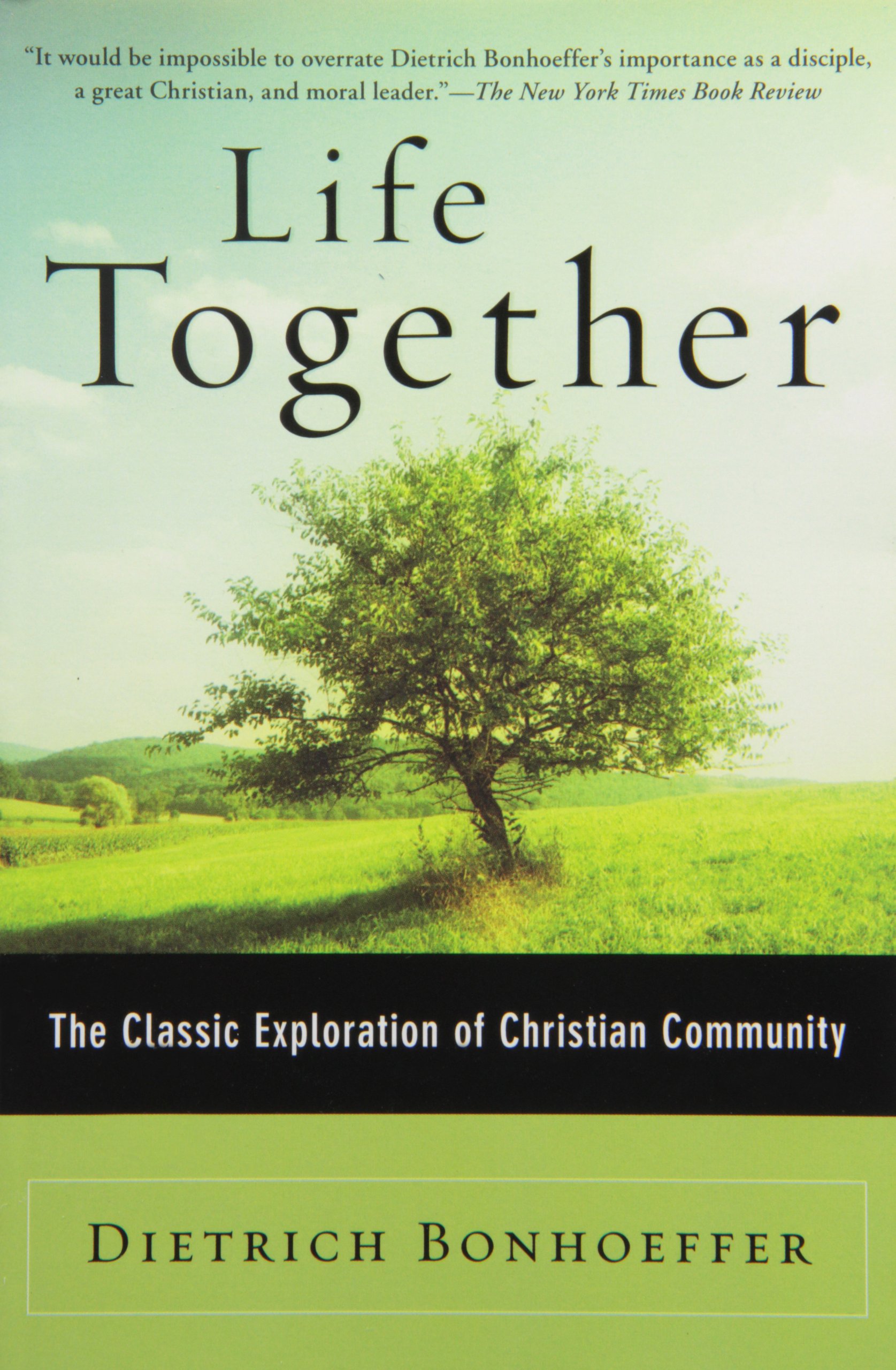
Book Review: Life Together - Dietrich Bonhoeffer

     Doing Christian community well is difficult, for where people are involved, people will get hurt. In this book, Bonhoeffer explores the importance of Christian community, what one such community looks like, and the challenges it will face.

     With only five chapters, this book about Christian community is short, but Bonhoeffer is incisive in his observations, being firm, yet gentle as he identifies potential pitfalls and offers prescriptions.

     In chapter 1, he writes about the necessity of community and defines the term. He writes that ‘our community with one another consists solely in what Christ has done to both of us’ (p. 25). He also helpfully addresses the issue of Christians having an ideal of what a Christian brotherhood should look like, saying its inevitable ugliness and messiness is a place for God’s grace to be displayed. After all, ‘Christian brotherhood is not an ideal which we must realise; it is rather a reality created by God in Christ in which we may participate’ (p. 30).

     Chapters 2 and 3 talks about communal and individual living. Chapter 2 is a series of prescriptions on the activities a Christian fellowship should do in order to grow as a community. Chapter 3 addresses the importance of individual time alone with God.

     In chapter 4, he writes about ministries that are important for a local group of Christians. These are very helpful because Bonhoeffer places a great focus on personal humility and other-person-centredness. Chapter 5 ends the book with a call for the importance of confession of sin to one another.

     Bonhoeffer writes with a loving tone. His voice is that of a pastor who cares greatly for God’s people. The book is no academic treatise; it is a ‘this-worldly’ exploration of what it means to be part of a Christian community. I really recommend this book to anyone wanting to learn how to live with other Christians together, better.  

Thursday, 2 June 2016

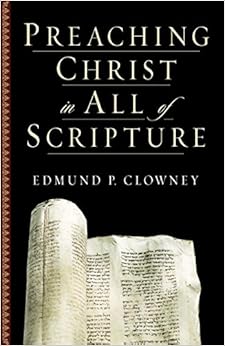
Book Review: Preaching Christ in All of Scripture - Edmund Clowney

     Clowney says in the preface that the chapters are ‘[…] sermons are offered as messages to be heard as preaching, not as footnoted theses for study’ (p. 10). Thus, the book is not so much about how to preach Christ in all of Scripture, but a few examples of how one can go about it. The first two chapters do provide some kind of theoretical framework, but I thought the content could have been organised better.

     So here are the chapters:
1)    Christ in all of Scripture.
2)    Preparing a sermon that presents Christ.
3)    Sharing the father’s welcome (Luke 15: 11-32).
4)    See what it costs (Genesis 22: 1-19).
5)    When God came down (Genesis 28:10-22).
6)    The champion’s strange victory (Genesis 32).
7)    Can God be among us (Exodus 34:1-9)?
8)    Meet the captain (Joshua 5:13-15).
9)    Surprised by devotion (2 Samuel 23:13-17).
10) The Lord of the manger.
11) Jesus preaches liberty (Luke 4:16-22).
12) The cry of the God-forsaken saviour (Psalm 22:1).
13) Our International Anthem (Psalm 96:3).
14) Jesus Christ and the lostness of man.
15) Hearing is believing: The Lord of the Word.

     These sermons are written to elicit praise, and so his language is beautiful and his points quite easy to follow. Almost every chapter ends with a call to see afresh God’s grace to His people in Christ throughout redemptive history, and as such, the book can be read as a devotional.

     The aspect of the book I find most helpful is Clowney’s ability to draw lines of connection from Old Testament events, figures or objects to Christ. He does so quite carefully, although I found some of his readings somewhat arbitrary, and leaning slightly towards allegory. But overall, he models good interpretive practices, always paying careful attention to the redemptive-historical character of the Bible.

     All in all, the book is not an academic treatise on the topic, but a pastoral exhortation to see and savour Christ in all of Scripture. 

Sunday, 8 May 2016

Poem: Out of the Mire of Despair

     I haven't written a poem in a long time. I've started on a few but cannot seem to finish them. Perhaps reading great poetry has exposed my poetic inadequacies and I am caught in a fear of failure - a sickening mental paralysis. The past week was tough, but when I really left my house for the first time in a week yesterday, I saw (what I think are) tulips growing on the outside of the wall. I've never really been one who appreciates flowers, but they caught my eyes - bright yellow and red. And I remembered another tulip, rather TULIP and slowly I found words. 

     2 Corinthians 4: 1-6 has been one of the most significant passages that taught me what grace looks like, and how one should respond to it. Here's verse 6 (perhaps my favourite Bible verse) before you read the poem: 'For God, who said, "Let light shine out of darkness," has shone in our hearts to give the light of the knowledge of the glory of God in the face of Jesus Christ.'

Out of the mire of despair,
The Lord has lifted me.
He, whose image I had impaired,
Has heard my hopeless plea.

Far from my flashes of constancy,
The Lord, His word has kept.
Convulsed in rebellious ecstasy,
This being is sunk in debt
To unrighteous consistency -
The payment – yet – strangely met.

For the Curse was pronounced its doom
In tomes of ancient time;
A man would bear weak Adam’s doom,
A swap for humankind.

Then into the midnight of my soul,
My Lord has shone his light;
Evinced in wounds whence a crimson flow
Surely cured sin’s deadly blight.

Friday, 15 April 2016

Book Review: The Gospel - Ray Ortlund

     The full title of this book is The Gospel: How the Church Portrays the Beauty of Christ. And the subtitle is important to understand Ray’s point. He wants to show how gospel doctrine creates a gospel culture – and all that is to display Christ’s beauty.

     Thus, in this short book, Ray seeks to show the gospel implications for the individual, the (new) community (of believers) and the cosmos. These are the first three chapters of the book which provide the theological framework for the next four chapters.

     In chapters 4 – 7, Ray fleshes out what it looks like to ‘do church.’ He is realistic. Thus, he warns of suffering, of discouragement, of difficulty; at the same time he shows readers that because God is building His church, there is the joyful certainty that if the gospel is at the church’s ‘sacred centre,’ it can gradually become the community God designed it to be.

     Ray writes with great humility, gently showing us the folly of Christian self-trust (which, if we are honest with ourselves, is almost always the case), and pointing us to the glories of Christ’s gospel. This book is a call for churches to enjoy the gospel once more if we have lost sight of it, and to behold its beauty every day, because we can never get enough of it. It is also an encouragement and challenge for Christians to live passionately for the gospel.

     He quotes Francis Schaeffer ‘if we do not show beauty in the way we treat each other, then in the eyes of the world and in the eyes of our own children, we are destroying the truth we proclaim.’ And we can only show that kind of beauty if we have tasted, and are daily devouring the beauty of the gospel.

     I know my church needs a truly gospel culture. I don’t think I will suddenly love my fellow Christians in a drastically different (and better way), but this book has pointed out to me what I must do if I want to love better – be gripped by the gospel. So if you want to love the church better, I’d say this gem of a book is for you.