Don't listen to ourselves; talk to ourselves, for truth lies outside of us - in God's Word.
Thursday, 24 March 2016
The Christian's Ode to Joy
This is arguably the best talk I've heard on the issue of not feeling what I know to be gospel truths.
Don't listen to ourselves; talk to ourselves, for truth lies outside of us - in God's Word.
Don't listen to ourselves; talk to ourselves, for truth lies outside of us - in God's Word.

Friday, 18 March 2016
"What is Literature?" - A Peek
Let’s start with
this quote from Tony Bennett: ‘the uniqueness of ‘literature’ consists in its
tendency to ‘defamiliarise’ experience.’
Thus, the simple
answer to the proposed question is this: literature is any work which causes us
to think and feel anew – that is, experience something as though for
the first time. Well, admittedly, this doesn’t sound smart, nor does it
sound complicated – but I think it is really important. Let’s explore why.
Almost 100 years
ago, a smart guy from Russia called Viktor Shklovsky identified a problem in
his society. He quotes Leo Tolstoy who says ‘if the whole life of many people
is lived unconsciously, it is as if this life had never been.’ Shklovsky chillingly
elaborates, saying that ‘this is how life becomes nothing and disappears.
Automatization eats things, clothes, furniture, your wife and the fear of war.’
Two words are
worth exploring: ‘unconsciously’ and ‘automatization.’ What Shklovsky has in
mind is that once an experience is repeated - and in our age, so many things
are on repeat – it becomes a habit, and routine actions become automatic. For
example, I was lost during the first few days of my arrival in Durham and
everything looked fresh and new. Now, after having lived here for almost a year
and a half, I’ve lost the initial feelings I had when I first experienced the
city. Now, I ‘recognise’ things instead of ‘see’ things. In other words, we are
being routinely desensitised to life; ours is a numbed existence where we embark
on a wild goose hunt for success and dreams, only to find waiting at the end of
the rainbow – the sniggering face of Death.
Literature then,
is that which ‘restores the sensation of life, in order to make us feel things,
in order to make a stone stony.’ This re-sensitising us to ‘the
sensation of life’ is achieved primarily through ‘defamiliarisation.’ This
simply means that we describe things differently. I’d like to take a look at this
short story a friend (Clarissa, who blogs here) wrote, called ‘AlternateFrequencies:’
"There are many differences between him and her: skin colour, bank
balance, number of years they have carried on their shoulders. They travel in
alternate frequencies, destined not to meet.
Everyday at 3.15pm, however, he would wait outside her school door, the
hot sun pressing down upon him. The beads of sweat slide agonizingly on his
forehead like the condensation of his sugar cane drink.
There she is. Her designer schoolbag on her back, her latest iPhone, the
heavy textbooks she carries with one hand – all reminders of the dissonance
between him and her. Her eyes cut across the after-school din to meet his.
She approaches him, and gets inside the backseat of the car (not his).
He revs up his engine and drives.
And finally silence settles.
All the other drivers told him he was lucky, he was paid so well. All
her classmates told her it was good she was driven around. But no one saw the
tragedy of the silence.
They travel in alternate frequencies. They cannot, do not, make
conversation."
In her recounting
the scene of a driver escorting his employer’s daughter home from school, Clarissa
draws attentions to the disparity between the two characters – whose lives, though
vastly different, intersect in a seemingly mundane moment. This ability to
capture the imagination, I believe, lies in the disinterested narrator’s careful
attention to details. For, although we see a lot of things: the waiting driver,
the schoolbag, the iPhone and etc.; and we hear equally much: the after-school
din, the revving engine, the voices of other drivers and classmates – there is
finally and ultimately, an alienating silence.
I believe many
of us have witnessed scenes similar to this, but have never felt moved like we
would have when reading the short story. There is nothing inherently significant
about the story. Its effectiveness in communicating emotions is achieved simply
by defamiliarising our habitualised perception. Thus, returning to our
quotation at the start: ‘the uniqueness of ‘literature’ consists in its
tendency to ‘defamiliarise’ experience,’ we begin to see how unpretentious, yet
powerful this tool of defamiliarisation can be.
This, is what I
would consider the ‘literariness’ of a text: its ability to make one see and
experience life.
PS: I hope I have not misread Clarissa’s short story. XD
Tuesday, 1 March 2016
Book Review: Iron Sharpens Iron - Orlando Saer
 This is a great resource on how to lead a small group Bible study. The chapters are:
1) Why Small Group Bible Study?
2) Preparing for Leadership
3) Managing the Group
4) Mapping Out the Study
5) Leading the Meeting
6) Prayer, Care and Personal Nurture
The book length is manageable, and each chapter has robust content despite being quite a short
book.
Saer's thought moves from the importance of small group Bible study to consider the nitty-gritties of actually planning, managing and leading the group. He provides practical tips with clear Biblical foundations.
The book is written from experience and that comes across in the issues - dangers, challenges, realities - of small group study and is thus very helpful for anyone in such a leadership position. The book is also accessible to Christians who are not leaders - it offers a glimpse of what gospel-centred ministry looks like and I believe would help readers be better small group members.
However, the book is not a comprehensive guide to leading a Bible study and Saer offers a list of further readings at the end of the book. Nevertheless, this book is a very helpful introduction to this topic and if someone asked me for a book on how to lead a small group, I would definitely recommend this - perhaps because this is the only book I've read on the topic. Regardless, I've found it immensely beneficial, especially in how he ably crystallises the foundations of and tips for leading a good small group Bible study.
Wednesday, 24 February 2016
For us men
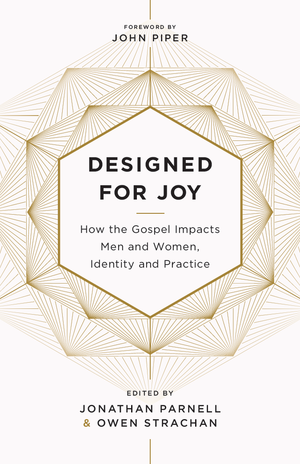 Below is an excerpt
from Designed for Joy: How the Gospel Impacts Men and Women, Identity and Practice.
I was very struck by this passage and thought it was worth sharing.
Below is an excerpt
from Designed for Joy: How the Gospel Impacts Men and Women, Identity and Practice.
I was very struck by this passage and thought it was worth sharing.
"My (Grant’s)
dad, Charles Kelly Castleberry Jr., was a Marine Corps fighter pilot and a
Christian. One night my dad’s squadron took a “mandatory” trip to a beach house
somewhere along the Atlantic Coast. No wives or children were allowed to come. This
was a special night in which many of the young pilots would receive their “call
signs.” Shortly after my father arrived at the beach house, he realised why
family members were not invited. Someone had invited strippers as entertainment
for the evening. Later that night, when he confided this event to my mom, she
asked him how he responded. He said that he had stayed in the corner of the
beach house with his hand over his eyes.
A few months
later, my father was killed in a midair collision over the Atlantic Ocean. After
my father’s crash, a pilot in the squadron gave my mom a picture that someone
had taken inside the beach house that night. He told my mom that deep down “everyone
respected Kelly for it, but no one had the guts to follow him.” Sure enough, in
the photo was my father in the corner, hand covering his eyes. When I was a
young boy, my mom showed me that picture and explained the integrity and
courage my dad had displayed in that moment – integrity and courage that had characterised
his life in Christ. Mom framed the picture and put it in my room as a constant
reminder of his legacy.
When the
squadron cleaned out my dad’s locker after the accident, they found taped up
inside his locker Paul’s last will and testament to a young pastor-in-training:
For I am already being poured out as a drink offering, and the time of
my departure has come. I have fought the good fight, I have finished the race, I
have kept the faith. Henceforth there is laid up for me the crown of
righteousness, which the Lord, the righteous judge, will award to me on that
Day, and not only to me but also to all who have loved his appearing. (2 Tim.
4:6-8)
My dad covered
his eyes at the beach house because they were fixed on his Saviour. This focus
isn’t easy. As Paul said, it’s a fight of faith. It’s a fight for purity. But it’s
worth it. Christ is the purity we can count on. Keeping our eyes on him is
worth it because he is the only one who can truly satisfy our souls. “For here
we have no lasting city, but we seek the city that is to come” (Heb. 13:14)." (pp. 116-117)
The fight for purity
takes guts, it takes courage – I don’t want to be a coward. In the gospel of Christ, I don’t
have to be a coward.
Monday, 22 February 2016
Poem: Sin
Shut
up God,
I’m
in charge,
No
place for you.
Such is the depth of my depravity,
That every atom lodging in this frame
Rebels with unashamed impunity
Against the One who formed and so did
name
Me as His own – imagine that insanity!
Who would pay thought to save this helpless
slave,
Who revels in his self-condemning state?
Him, whose voice shone light into the
dark, gave
Him to see the tree on which the debt
was paid,
Where Christ – the promised king submitted
to the grave.
Thus,
Saved
by God,
I’ve
no charge,
None
could but you.
Monday, 8 February 2016
Some thoughts on the extent of the Atonement
I have just started reading Perspectives on the Extent of the Atonement. I am only in the foreword and already there are lots of things to digest. I would like to write about it as I read as a way to articulate my thoughts. So here I offer some preliminary thoughts. The three views discussed are: 1) Definite Atonement (limited atonement or particular redemption), 2) General Atonement (universal or unlimited atonement), 3) Multiple-Intention View of the Atonement (Amyraldism or hypothetical universalism).
Definitions:
1) Definite Atonement: Christ's atonement is particular in intention and efficacious in character. Thus, we say 'Christ died for his people.' This view is generally held by Calvinists and is currently the view I hold to. There are four major concerns:
a) Penal Substitution - individual sinners need to be punished.
b) Divine Justice - God cannot punish sin twice, ie. if Christ died for all, no one should enter hell.
c) Language of Efficacy - categories of the atonement: propitiation, expiation, redemption, reconciliation are regarded as efficacious (actually achieved) rather than provisional (having the potential).
d) The Unity of God's Purpose - Trinitarian purpose of salvation. The Father elects a people, Christ dies for them, the Holy Spirit regenerates them (and enables them to persevere as well).
2) General Atonement: Christ's atonement is universal in intention and provisional in character. Christ intended to provide atonement for all, but did not intend to apply atonement to all people without exception: application is instead the purview of faith. Major concerns:
a) Exegetical Concerns - this emerges from a plain reading of Scripture.
b) Theological Concerns - God's love is infinite; Christ's death doe not itself save, it makes salvation possible for those who actualise it by faith; humans are free to choose.
c) Evangelistic Concerns - one can really say 'Christ died for all.'
3) Multiple-Intention View of the Atonement: Christ's atonement has both universal and particular purposes and has elements that are alternately provisional and efficacious in character. This is clearly a middle ground. This view maintains that Christ intended (1) to pay the penalty for the sins of all human without exception, thus making possible both the salvation of all and the free offer of the gospel to all, but (2) to secure the salvation of the elect alone. Thus, a 'universal atonement' and a 'limited redemption,' and 'sufficient for all but efficient for the elect.' A distinction here from Definite Atonement is that DA would argue that it is 'sufficient and efficient for the elect.' Concerns are mainly trying to affirm the nice bits of both extremes.
A few thoughts:
On the surface, DA seems pretty harsh: God's choice seems arbitrary; human agency seems to be disregarded; can easily lead to a fatalistic determinism; evangelistic language issues (one can't really say 'God died for you' since we don't know that).
GA sounds pretty acceptable, but seems to diminish God's work by emphasising a human response (faith) as a necessity to receive salvation. Thus, the cross doesn't save, it might save, with the individual as the ultimate determining factor.
This is the first time I've encountered the MI view. I'm not sure how we reconcile 'sufficient for all but efficient for the elect.' If it were sufficient for all, should not all have an equal chance of being saved? Anyway, I'll have to read more about this. But this book is already proving to be really exciting.
Definitions:
1) Definite Atonement: Christ's atonement is particular in intention and efficacious in character. Thus, we say 'Christ died for his people.' This view is generally held by Calvinists and is currently the view I hold to. There are four major concerns:
a) Penal Substitution - individual sinners need to be punished.
b) Divine Justice - God cannot punish sin twice, ie. if Christ died for all, no one should enter hell.
c) Language of Efficacy - categories of the atonement: propitiation, expiation, redemption, reconciliation are regarded as efficacious (actually achieved) rather than provisional (having the potential).
d) The Unity of God's Purpose - Trinitarian purpose of salvation. The Father elects a people, Christ dies for them, the Holy Spirit regenerates them (and enables them to persevere as well).
2) General Atonement: Christ's atonement is universal in intention and provisional in character. Christ intended to provide atonement for all, but did not intend to apply atonement to all people without exception: application is instead the purview of faith. Major concerns:
a) Exegetical Concerns - this emerges from a plain reading of Scripture.
b) Theological Concerns - God's love is infinite; Christ's death doe not itself save, it makes salvation possible for those who actualise it by faith; humans are free to choose.
c) Evangelistic Concerns - one can really say 'Christ died for all.'
3) Multiple-Intention View of the Atonement: Christ's atonement has both universal and particular purposes and has elements that are alternately provisional and efficacious in character. This is clearly a middle ground. This view maintains that Christ intended (1) to pay the penalty for the sins of all human without exception, thus making possible both the salvation of all and the free offer of the gospel to all, but (2) to secure the salvation of the elect alone. Thus, a 'universal atonement' and a 'limited redemption,' and 'sufficient for all but efficient for the elect.' A distinction here from Definite Atonement is that DA would argue that it is 'sufficient and efficient for the elect.' Concerns are mainly trying to affirm the nice bits of both extremes.
A few thoughts:
On the surface, DA seems pretty harsh: God's choice seems arbitrary; human agency seems to be disregarded; can easily lead to a fatalistic determinism; evangelistic language issues (one can't really say 'God died for you' since we don't know that).
GA sounds pretty acceptable, but seems to diminish God's work by emphasising a human response (faith) as a necessity to receive salvation. Thus, the cross doesn't save, it might save, with the individual as the ultimate determining factor.
This is the first time I've encountered the MI view. I'm not sure how we reconcile 'sufficient for all but efficient for the elect.' If it were sufficient for all, should not all have an equal chance of being saved? Anyway, I'll have to read more about this. But this book is already proving to be really exciting.
Friday, 5 February 2016
They said, "I can't believe you actually came."
In the past
week, I went to two church friends’ ‘Physics Poster Presentations.’ I don’t know
if the events are really called that. I study English and my knowledge of physics
is like a toddler’s understanding of walking; and yet I found myself (with some
other church members) hearing a fascinating explanation of Feynman’s path integral
theory. I came away feeling a wee bit smarter, but what struck me most was that
my Physics friends said, ‘I can’t believe you actually came.’ Well, technically,
only one of them said this. But I figure it’s safe for me to make the
assumption that my other friend was thinking along the same lines.
Right, so what
was an English student doing at a physics event? I can honestly say that it is more
than just pure interest. That is certainly a contributing factor, but I know
that the deciding factor that made me go was because they were my brother and
sister in Christ.
Should it be surprising
for a Christian to go out of his/her way to support a fellow Christian in the things
they are involved in, big or small? I suppose not. In fact, I think it should
be surprising if we don’t do that. Christianity claims to completely transform relationships
and communities. One of its main characteristics is a self-sacrificial other-person-centeredness.
In my church Bible study, we’re going through 1 Corinthians and one of Paul’s major
concerns from chapters 8-14 is that we act for the good of the other person. This
applies to using knowledge (chap. 8), employing our Christian rights (chap.
9-10), eating the Lord’s Supper (chap. 11), and corporate worship (chap. 12-14).
Our age is one
which idolises the individual and the Bible speaks against this subtle form of self-worship.
Paul doesn’t teach that we don’t take care of ourselves; he says the other (whether
Christian or non-Christian) is more important than us. And the motivation for such
self-sacrificial living is the gospel – where Jesus gave up his life for undeserving
rebels.
We are not asked
to give up our lives to save another person from sin – thankfully –but we are called
to be proactive in seeking the good of others. Matt Perman in “What’s Best Next”
suggests that a core purpose for the Christian is ‘to do all the good I possibly
can, for as many people as I possibly can, as often as I possibly can, in all
spheres of life, regardless of whatever difficulties I meet with, and to do
this to the glory of God through Jesus Christ’ (p. 163). In this instance of going
to a Christian friend’s ‘Physics poster presentation,’ it doesn’t seem terribly
significant, but I think our willingness to give up time – precious time – which
I could have used to study or ‘do my own thing’ for ‘small’ things trains us to
make sacrificially serving others a habit.
Is this really
important though? My going or not doesn’t seem to have any tangible effects on
the other person. But I’m sure they would be encouraged; I’m sure they would appreciate
it. Who doesn’t like talking about something they worked hard for to a willing audience?
I think this is a good work, because we are showing a genuine interest in the
other person’s life. We’re saying, ‘I’m not an expert on this subject, neither
am I passionate about it. But because you are my brother or sister in Christ, I
will choose to be interested in what you are interested about. We might not
gain any benefit from showing interest – but when has Christian relationships
ever been about benefiting the self first?
Seeing my
friends smile and be surprised when they see you is great. It reminds me of grace
– in this case doing something nice for someone not expecting it – and points
me to God’s greater grace, where “God shows his love for us in that while we
were still sinners, Christ died for us” (Romans 5:8).
There will always be times when I'll place myself before others, but I want to be intentional in relating to others. So when I make decisions about spending time for people, this (I hope) will inform my choice: I will give; I will
serve; I will come if that shows the other person that one more Christian cares,
because God first gave; Christ first served; Christ first came, and I’m a grace
case.
Subscribe to:
Posts (Atom)